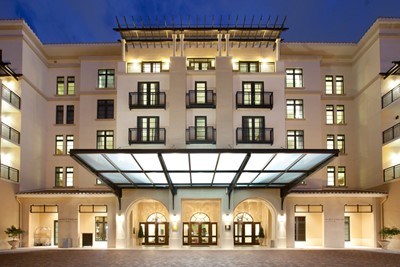
The Story of Artifx Cafe coffee, Proudly Served at The Alfond Inn
5/24/2026
In the sun-washed lobby of The Alfond Inn, the morning ritual usually starts with a scent. Guests trail toward The Café, drawn by an aroma that is rich, nostalgic, and entirely devoid of the burnt bitterness that has long characterized the modern American caffeine fix. They are here for the Fox Den Blend, a coffee that has quietly become a staple of the Winter Park experience. To the casual traveler, it is simply an exceptionally smooth cup of black coffee. To Dr. Keith Whittingham—a Rollins College professor, former electrical engineer, and the founder of Artifx Cafe—it is a lesson in ethically minded economics masquerading as a morning beverage.

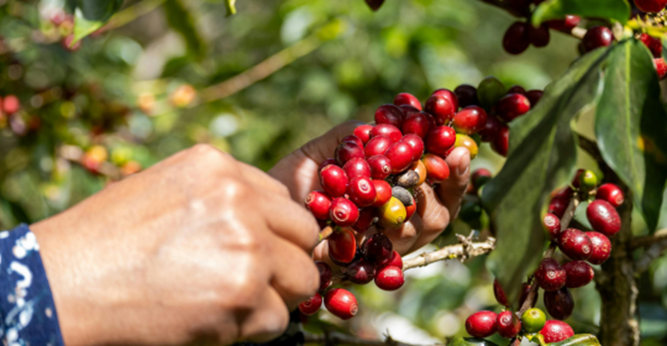
For a decade, coffee was a utility for Whittingham. But while developing courses in socially responsible enterprise for the Crummer Graduate School of Business at Rollins, he joined a faculty trip to Costa Rica in the summer of 2008. In the mountainous community of Monteverde, he stood on a coffee farm, looking at coffee fruit actually growing on a tree for the first time. On the van ride back to town, the host farmer mentioned a desire to create an educational program about eco-conscious farming practices alongside their family business. Whittingham, on a whim, asked if a group of sharp young MBA students might be of use.
By the spring of 2009, Whittingham had students on the ground. They drafted the strategic plan for what became Life Monteverde, the educational arm of the farm. Over the next sixteen years, Whittingham would bring more than three hundred students to the region, embedding them in the community to solve complex local problems using human-centered design thinking.
The Bitterness Upstream
As Whittingham returned to Monteverde year after year, the relationships he forged revealed the systemic instability of the global coffee trade. "I started to develop deeper relationships in the community with other farmers," he says, "I really started to understand from their stories about the tough decisions they had to make around the one time of year, after the harvest, when they get their income from their business. ‘I need to figure out how to budget for my family for the whole year. Do I pay school costs for my kids, or do I pay for upkeep on the farm? And these are tough decisions when you're facing a very limited income. A lot of farmers were basically losing money year over year."
The standard structure of the coffee economy, he realized, was fundamentally broken. "The big companies make a whole lot of money on the retail end, closer to the consumer," Whittingham explains. "As upstream, the farmers–many of them are walking away from their farms because they're realizing after decades that they're not making any money; and their kids want nothing to do with growing coffee because they've seen their parents and grandparents struggle for years."
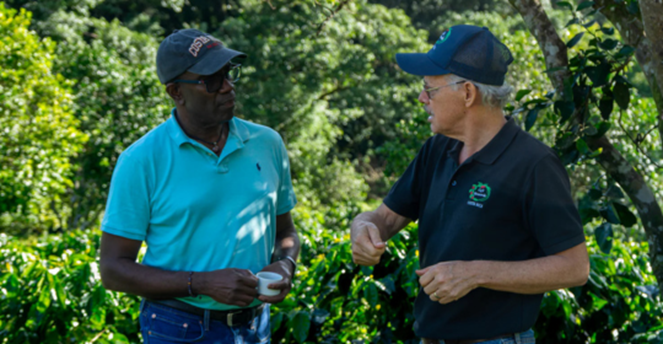
The antidote to this existential crisis, Whittingham believed, lay in shifting consumer focus from corporate convenience to artisanal precision. He recalls a transformative breakfast in that Costa Rican mountain community, where a farmer prepared coffee using a rustic, traditional pour-over apparatus while an electric coffee maker sat ignored in the corner. The farmer spoke of the profound connection to one's food and tradition.
"For me, it was a tremendously eye-opening experience, and it shaped the way I think about coffee as a connection to tradition, to community, a connection across generations," Whittingham says. "That moment, that breakfast in that kitchen, I would say, totally changed my life in a lot of ways and was a big part of what became the momentum driving me to launch Artifx Cafe."
Terroir and the Campus Mission
To taste the Fox Den Blend served here at The Alfond Inn is to understand the meticulous variables of specialty coffee. The blend is an intricate marriage of two washed-process arabica coffees grown at nearly identical altitudes. Yet, their profiles are entirely distinct due to their geography. One comes from the edge of the Costa Rican Cloud Forest on the Continental Divide; the other is grown on the volcanic slopes bordering Mexico and Guatemala, both from communities where Rollins students have worked and learned over the years.
"The two locations are very similar on the surface," Whittingham notes. "But just that difference in the ecosystem, in the terroir–a term that people use to describe those kinds of environmental characteristics that are considered in growing grapes for wine or beans for coffee.” Essentially, terroir represents the regional identity of a crop, the unique combination of a specific location's soil composition, microclimate, altitude, and surrounding ecosystem that permanently imprints itself onto the fruit.
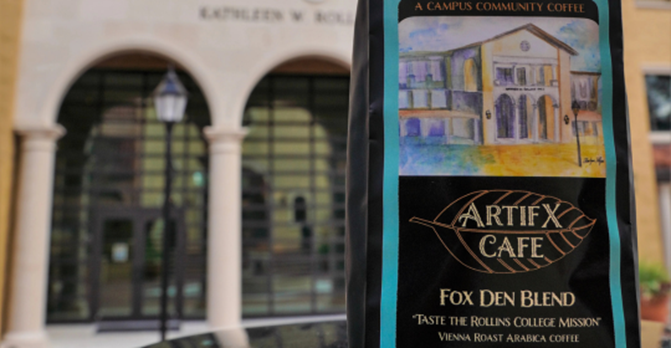
“So those two coffees, as similar as they might look on paper, have very, very different flavors. So much so that when we blended them together, it created something entirely different from each individual crop." The result is a cup characterized by an unexpected creaminess and a striking balance of flavors. Central American high-altitude coffees are often naturally fruit-forward—yielding subtle hints of strawberry, blackberry, or stone fruit like a peach —but the Vienna roast anchors these qualities with a rich, chocolatey, and earthy depth.
When the blend was first revealed to the Rollins community without a name, a senior administrator tasted it, walked up to Whittingham, and remarked, "Never before have I tasted the Rollins College Mission." The phrase stuck, becoming the tagline for the coffee. It is also beautifully fitting: the packaging for the Fox Den Blend features a delicate drawing of Kathleen W. Rollins Hall on campus, illustrated by Marilyne Polyne, a former student.
A Shared Journey
For us at The Alfond Inn, partnering with Artifx Cafe felt entirely natural. Our hotel has long operated under a unique mandate: our net operating profits are directed entirely toward funding student scholarships at Rollins College. By bringing Artifx Cafe into our café, the loop of social enterprise becomes beautifully complete.
"The sales of Artifx Cafe here in The Café at The Alfond Inn contribute to the net profits that go towards student scholarships at Rollins College," Whittingham says. "So there are really many different aspects of mission that come together every time you buy a cup or bag of coffee here. It's all part of that contribution that goes to support that mission of educating students in a variety of ways."
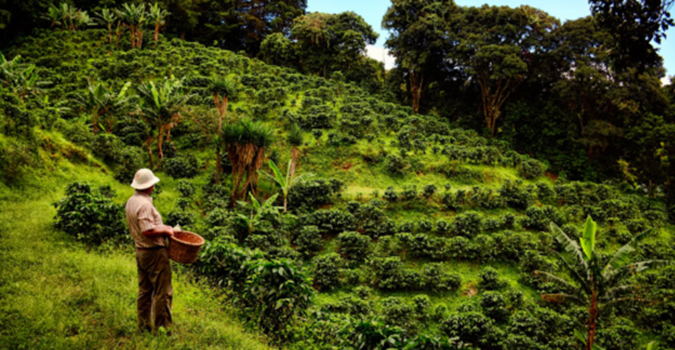
Ultimately, a cup of coffee is a brief moment in a guest’s day. But Whittingham wants to make that moment slightly larger, offering a quiet invitation to look past the rim of the mug and consider the chain of human effort stretching across the Americas.
"For me, if I could sum up, I'd say Artifx Cafe is an opportunity–an invitation to experience coffee, maybe in a different way by thinking a bit more, maybe by reflecting a bit more on what happens before the coffee gets to your cup or before it gets to the roaster," he says. "And we invite you to come to The Café at The Alfond Inn and enjoy our coffees as part of the experience you have here."